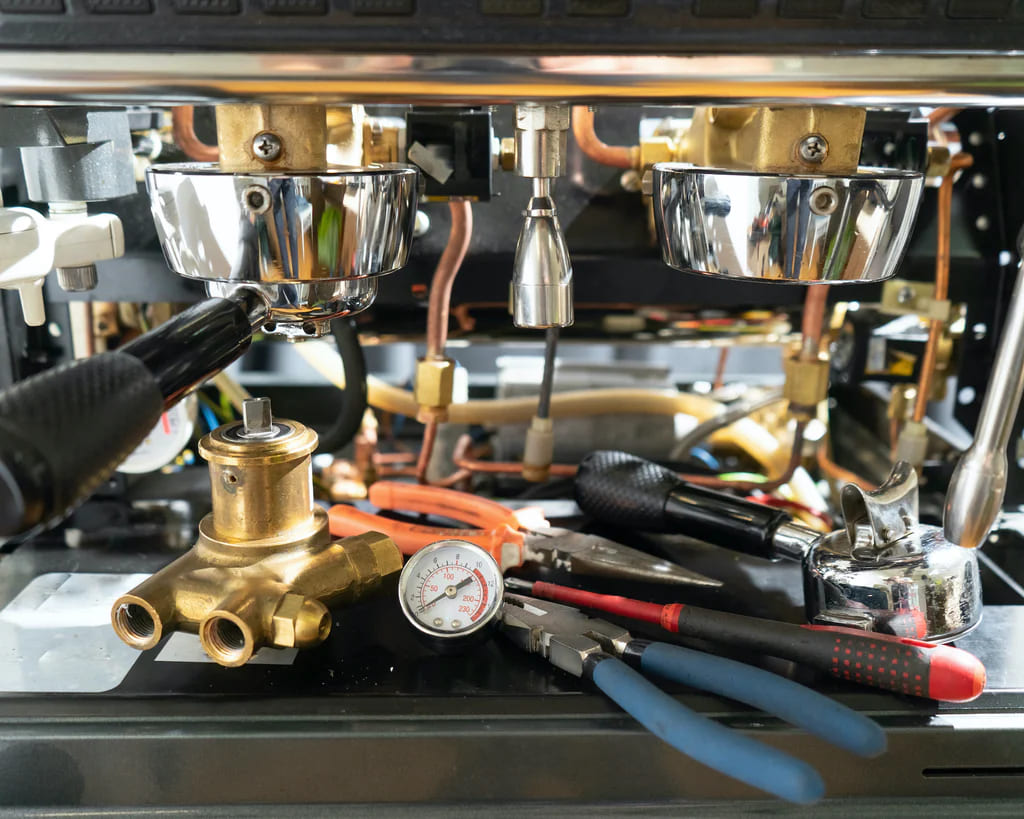
Nairobi’s thriving coffee culture has moved far beyond commercial coffee shops—it’s now a standard feature in corporate offices, co-working spaces, and private homes. Whether you operate a two-group commercial espresso machine in the CBD or rely on a bean-to-cup machine in your kitchen, keeping your unit properly maintained is essential for consistent shot quality and long machine lifespan.
Neglecting regular maintenance leads to poor pressure extraction, bitter coffee taste, and costly boiler burnouts. Here is your operational guide to maintaining your espresso machine in Nairobi’s environment.
The Silent Killer: How Hard Water Affects Espresso Machines in Nairobi
Water quality across Nairobi and surrounding counties contains varying levels of dissolved minerals (calcium and magnesium). When hard water is heated inside a coffee machine boiler:
- Limescale Formation: Minerals precipitate out of the water and coat the internal copper boilers, heating elements, and solenoid valves.
- Temperature Instability: Scale acts as an insulator, preventing heating elements from warming the water efficiently.
- Pressure Drops & Blockages: Scale flaking off inside tiny group head gigleurs restricts water flow, ruining shot times and extraction consistency.
Crucial Step: Always run your coffee machine through an external inline water filter or softener system, and replace water filter cartridges on schedule.
Essential Daily & Weekly Maintenance Checklists
Daily Tasks (For Cafes, Offices & Homes):
- Backflush the Group Head: Use a blind filter basket and plain hot water at the end of the day to clear residual oils from the shower screen and three-way valve.
- Clean the Steam Wand Immediately: Wipe down steam wands with a damp microfiber cloth after frothing milk and purge steam for 2 seconds to prevent dried milk from clogging internal steam tips.
- Purge Group Heads: Flush water through empty group heads before and after pulling espresso shots.
Weekly Tasks:
- Detergent Backflush: Perform a chemical backflush using specialized espresso cleaning powder to dissolve baked-on coffee tannins.
- Soak Portafilters & Baskets: Submerge portafilter handles (metal portions only) and filter baskets in warm water with espresso cleaner overnight.
- Inspect Group Gaskets: Clean around the rubber group head seals using a angled group brush to remove trapped coffee grounds that cause leaks during brewing.
Signs Your Coffee Machine Needs Professional Servicing
While daily cleaning keeps coffee tasting fresh, internal mechanical parts wear out over time. Look out for these signs:
- Leaking Around the Portafilter: Indicates hardened, worn-out rubber group gaskets that need replacement.
- Low or Inconsistent Steam Pressure: Points to scale accumulation inside the steam boiler or a failing pressurestat/heating element.
- Water Pooling Underneath the Machine: Signals a split internal silicone tube, failing safety valve, or drain box blockage.
- Unusual Pump Noise: Vibrating or screeching sounds during extraction indicate pump cavitation or impending motor failure.
Expert Coffee Machine Servicing & Repair in Nairobi
When your espresso machine requires descaling, pump replacements, electrical diagnostics, or complete seal kit overhauls, trust Primal Facilities Management. We service leading commercial and residential coffee machine brands across Nairobi CBD, Lavington, Karen, Kilimani, and Westlands.
- Services: Preventive maintenance retainers for offices/cafes, emergency leak repairs, boiler descaling, and parts replacement.
- Call to Schedule: +254 714 045 217
- Email: info@primalfacilitymanagement.co.ke